

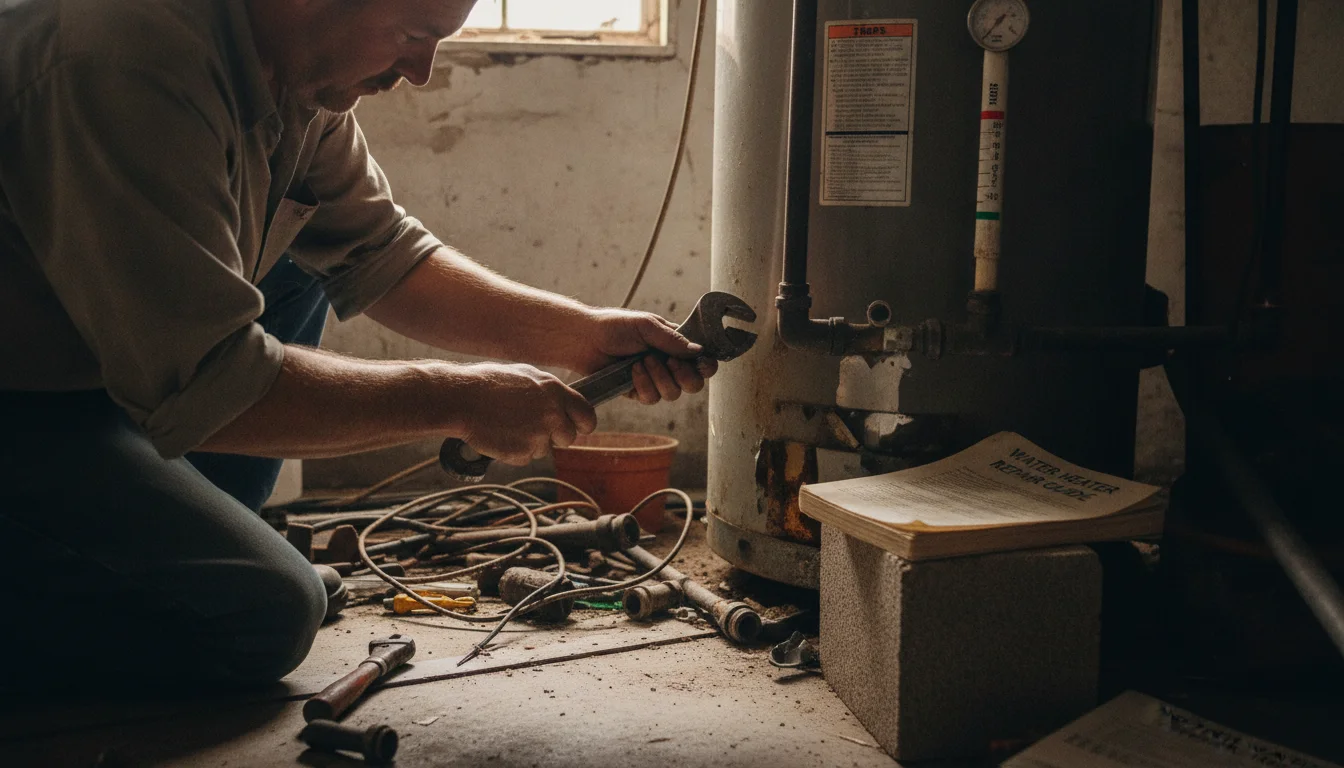
A sudden loss of hot water is frustrating, but most fixes start with a few safe checks. In many Springfield, Ohio homes and businesses, the fastest answers are to verify power or gas supply, reset a tripped breaker, relight a pilot, and confirm inlet and mixing valves are open. If those steps don’t restore heat, common causes include a faulty thermostat or heating element, ignition failure, sediment buildup, pressure or valve issues, or leaks—this guide from Plumbing Springfield Ohio explains each and shows when to call a pro.
Key Takeaways
- Start safe: confirm power, fuel, and open valves before deeper troubleshooting.
- Electric issues often trace to a tripped breaker, failed element, or thermostat fault; gas issues to pilot/ignition or venting.
- Sediment and scale reduce recovery and shorten equipment life—annual flushing helps.
- Know your limits: gas and electrical work require the right expertise.
- If the unit is old, leaking, or unsafe, replacement is usually the right move.
This guide explains how water heaters work, why heat can stop, and the top seven issues to check. It also shows when repair makes sense, when to replace, and how to prevent the next surprise. Homeowners and businesses in Springfield, Ohio and nearby areas can use this as a clear plan.
Table of Contents
- Start Here: No Hot Water? Quick Safety Checks and Next Steps
- How a Water Heater Works: Tank, Tankless, Gas, and Electric Basics
- Fast Diagnosis: Top Reasons You Suddenly Have No Hot Water
- Likely Problem #1: Tripped Breaker or Blown Fuse (Electric)
- Likely Problem #2: Pilot Light Out or Ignition Failure (Gas)
- Likely Problem #3: Faulty Thermostat or Wrong Temperature Setting
- Likely Problem #4: Burned-Out Heating Elements or Burner Failure
- Likely Problem #5: Sediment Buildup and Scale Reducing Heat Transfer
- Likely Problem #6: Valve or Pressure Issues Limiting Hot Water
- Likely Problem #7: Leaks, Corrosion, or Tank Failure
- Cold or Inconsistent Hot Water: Special Cases to Consider
- When to Call a Plumber: Urgent Signs and 24/7 Emergencies
- Repair vs. Replacement: Age, Efficiency, and Safety Criteria
- What It Costs: Typical Repair Pricing and Project Timelines
- Safe DIY vs. Pro-Only Repairs: Know Your Limits
- Preventive Maintenance That Keeps Hot Water Flowing
- Choosing a New Water Heater: Size, Recovery Rate, and Efficiency
- Frequently Asked Questions
What It Costs: Typical Repair Pricing and Project Timelines
Diagnostic visits and common part costs
The final cost depends on the brand, fuel type, failed part, access, corrosion, and any required updates. A diagnostic visit confirms the fault and the work needed. Smaller component repairs are generally less involved than major repairs or full replacement. The final cost should be confirmed on a quote before work begins.
Labor ranges for electric vs. gas work
Gas work can involve venting and safety checks, while electric element repairs may involve different testing and access requirements. Tight spaces, corrosion, code updates, and difficult access can make either job more involved. The final cost should be confirmed on a quote.
Same-day fixes vs. parts ordering delays
Timing depends on the fault, access, and availability of the required part. Standard components may be available sooner than special controls or unique gas valves.
Factors that drive price up or down
Age, rust, hard water, tight spaces, permits, code updates, and new venting can affect the scope of work. Upfront testing helps identify the appropriate repair or replacement. The final cost is confirmed on a quote.